THE ART OF ZELLIJ
An art form born in Morocco, shaped by centuries of cultural exchange and architectural tradition.
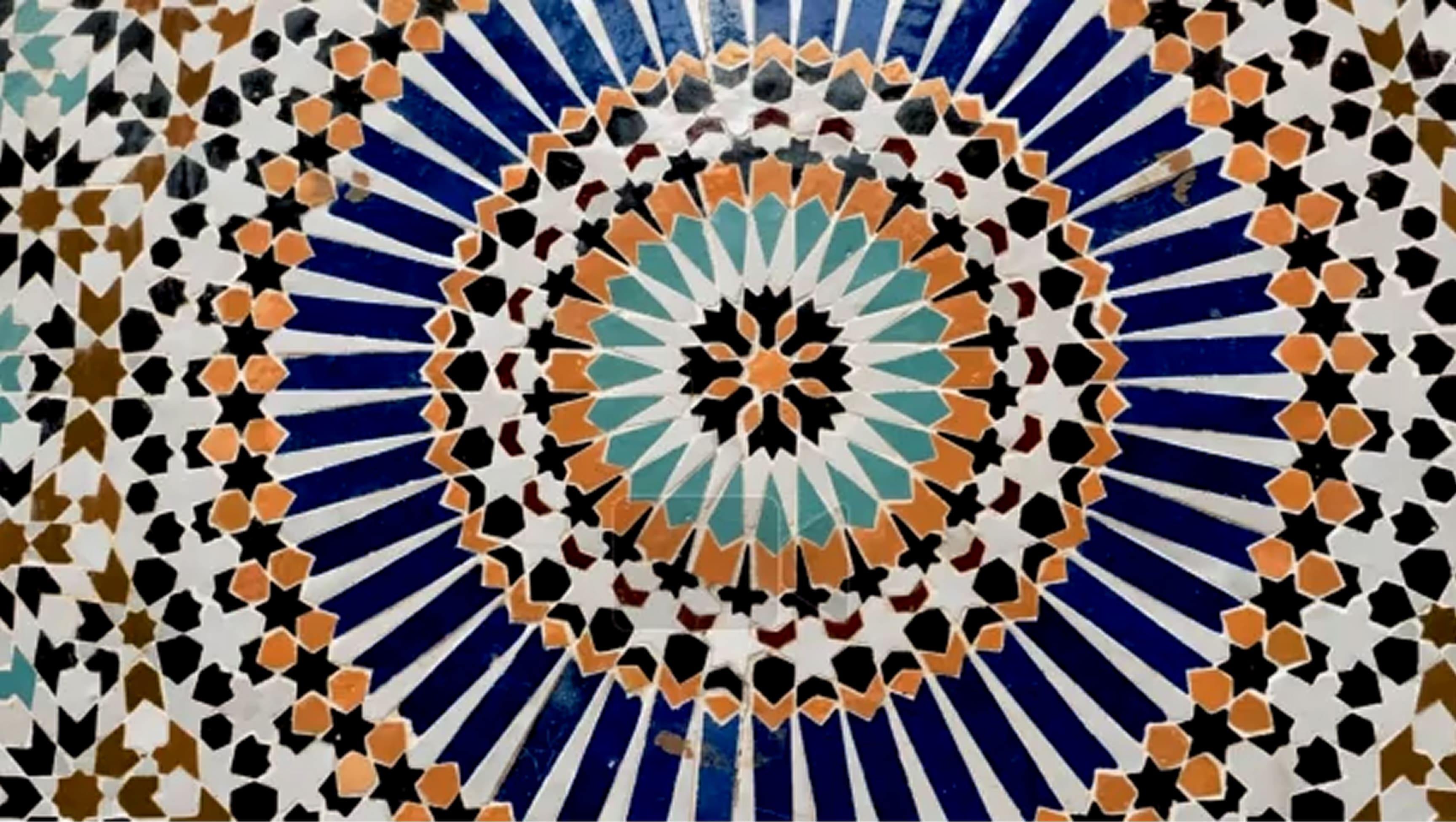
Zellij is an architectural art form developed in Morocco through centuries of refinement, reaching its highest expression between the thirteenth and fifteenth centuries. It is defined not by decoration, but by structure, by a system of geometry, proportion, and material discipline that governs how space is composed. Rooted in Islamic art, zellij relies on mathematical logic rather than representation. Patterns are generated through geometric rules that allow infinite variation within a fixed order. This balance between constraint and freedom is fundamental to its visual coherence and longevity.
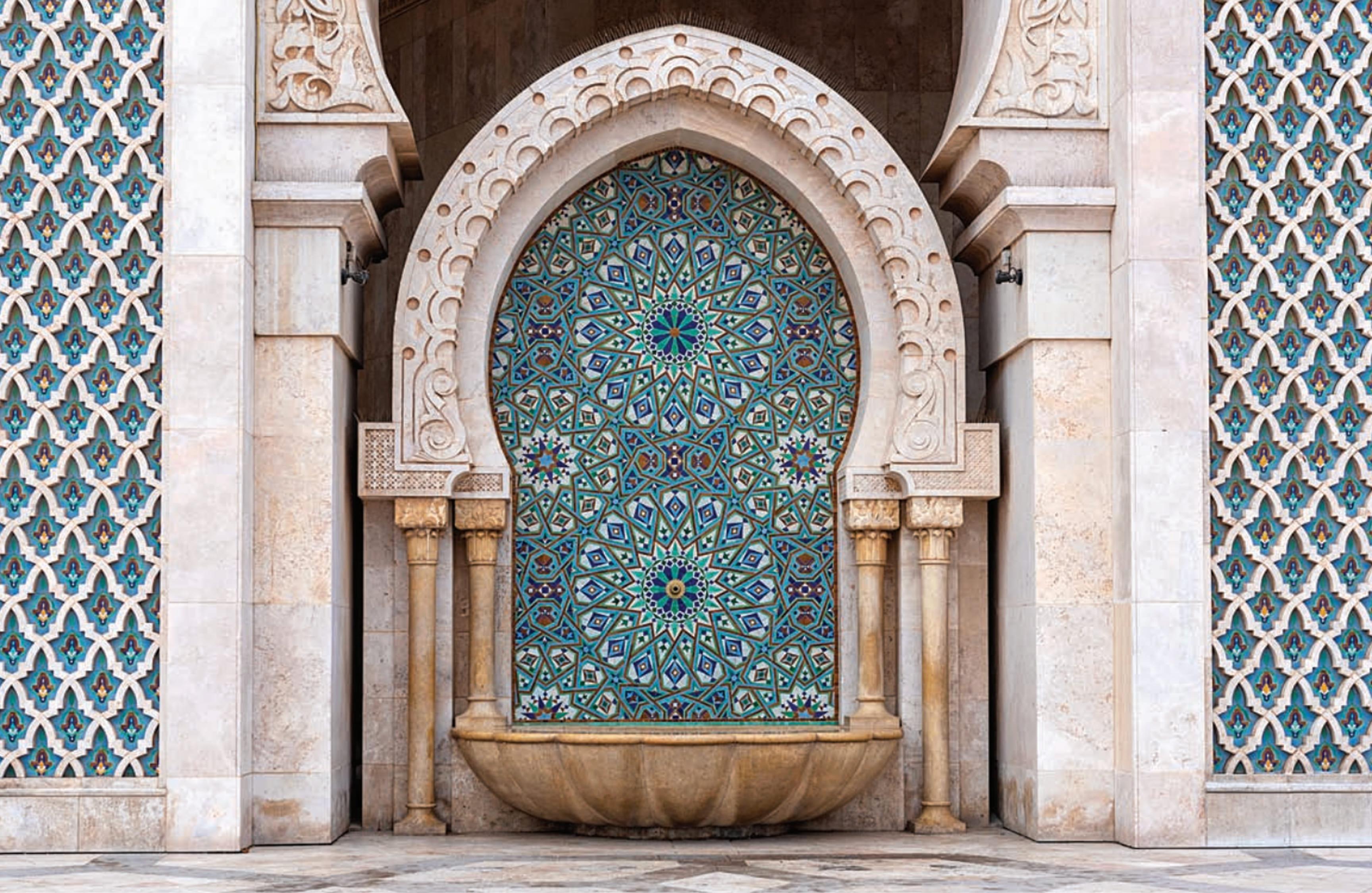
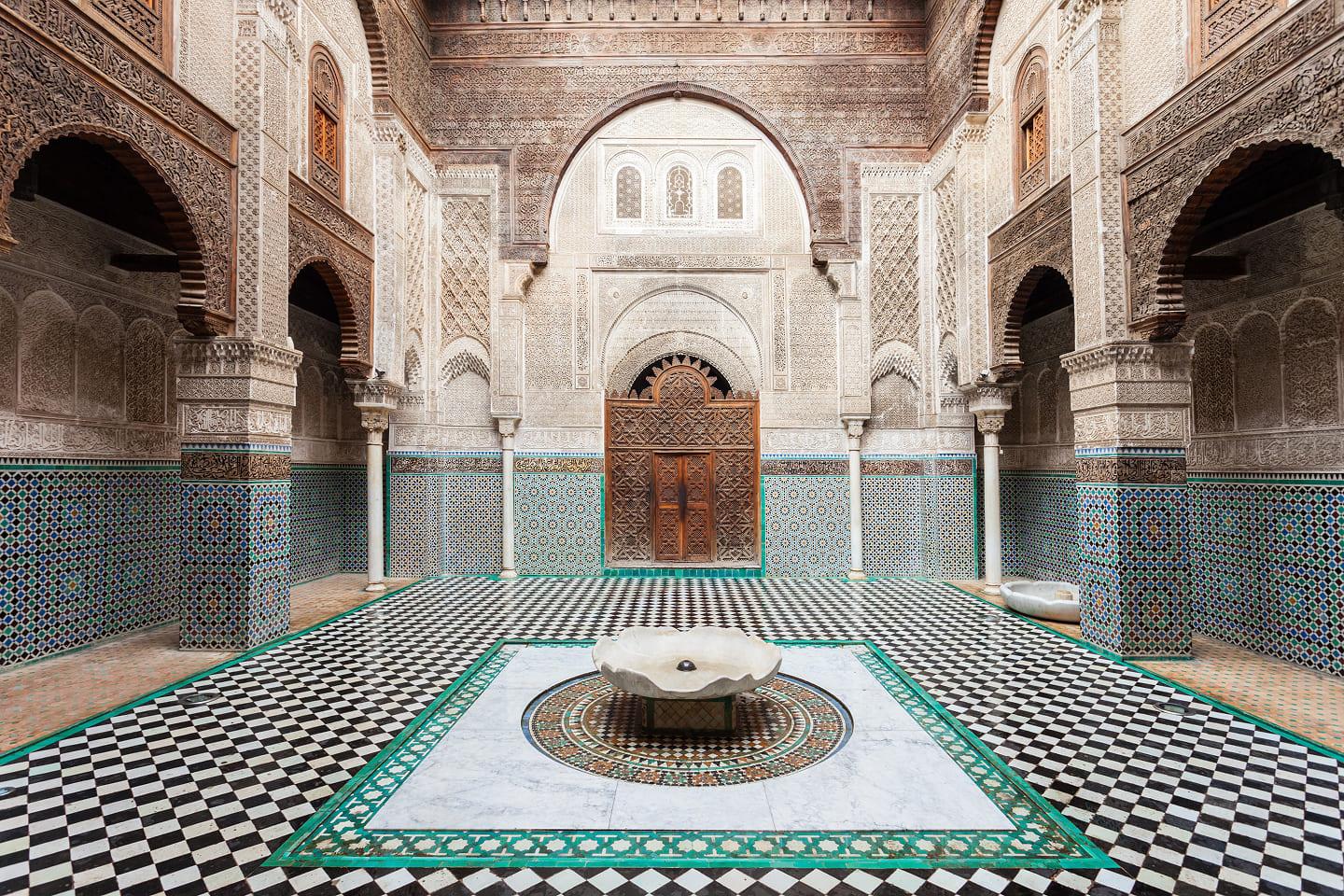
Historically, zellij was conceived as an integral part of architecture. It articulated walls, floors, fountains, and courtyards in palaces, madrasas, mosques, and civic buildings. These surfaces were not applied embellishments, but spatial elements designed to regulate rhythm, scale, and light.
Fez emerged as a central place in the development of zellij, where knowledge of geometry, cutting, glazing, and assembly was formalised and transmitted through apprenticeship. This continuity of practice ensured that technique and proportion remained consistent even as patterns evolved.
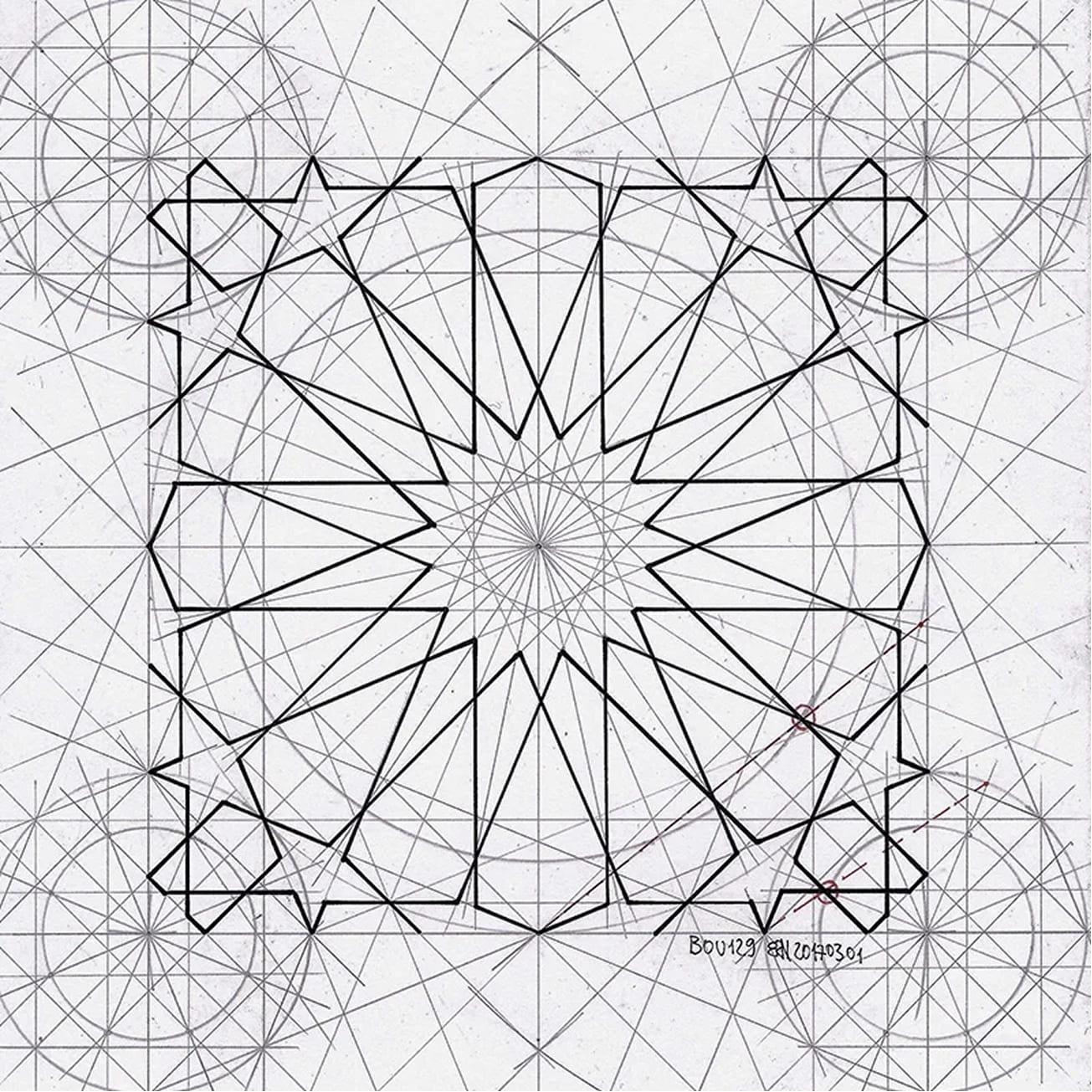
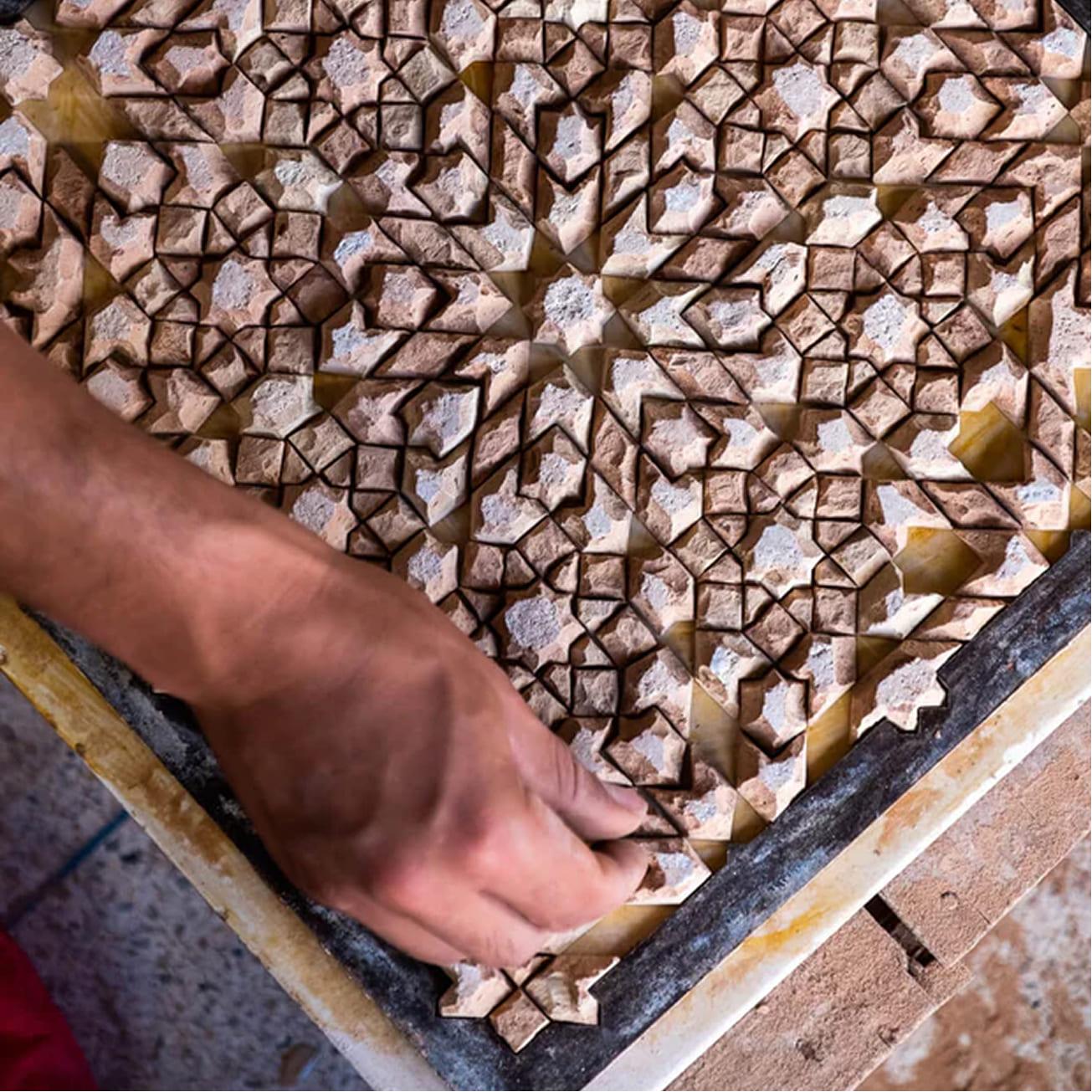
More than a surface, zellij is a language of space. Its presence reflects a balance between order and variation, precision and imperfection, material and light. It is this enduring quality that has allowed zellij to remain relevant across centuries of architectural history.